


I spotted this tiny house as I was crossing a stretch of tangled ferns. I was on a solo trek in Cove, which is on the west coast of Scotland. I had no plan, just a vague direction (South) and so this was totally unexpected.
I wasn’t sure what I was walking towards at first. From a distance it looked like a cosy, feet-up-by-the-fire hobbit house. Or a horror movie death shack.
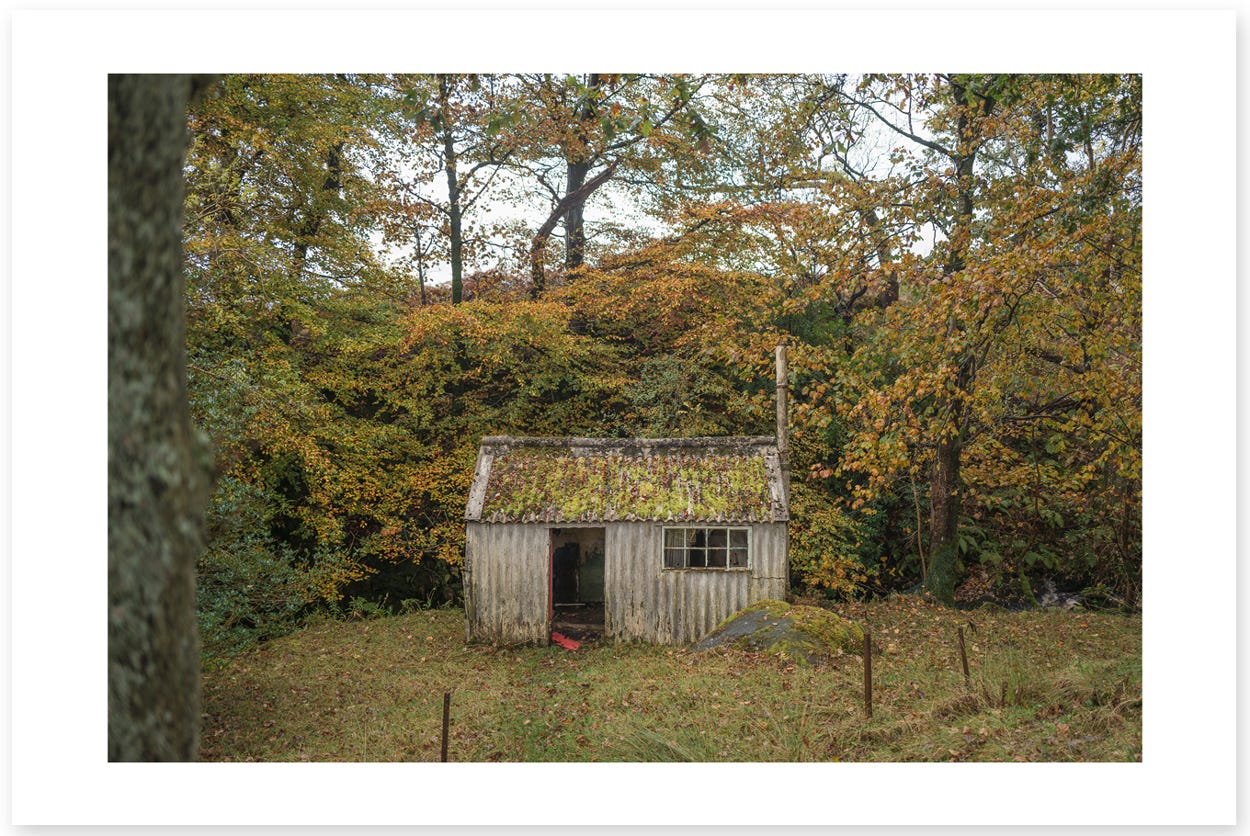
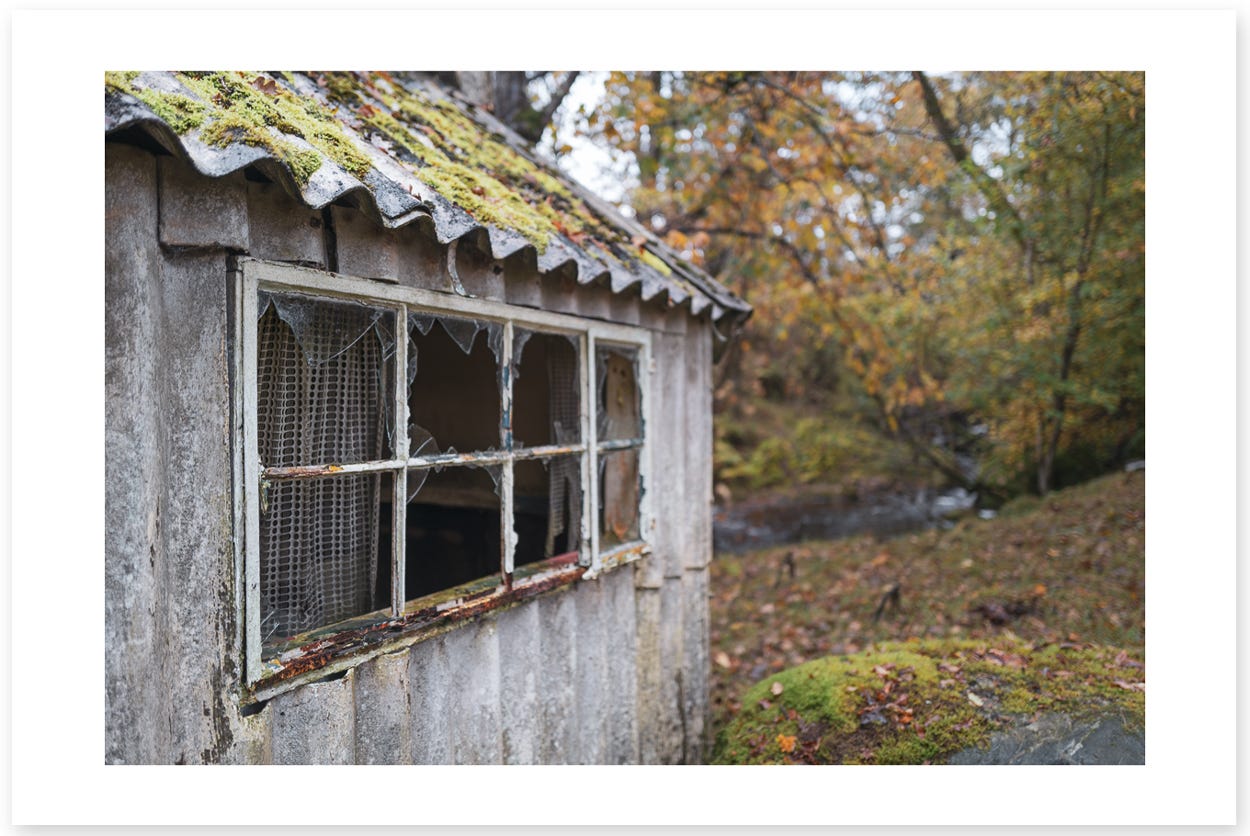
Here we are, a bit closer. No chainsaws on show but lots of corrugated iron (nothing good happens around corrugated iron).
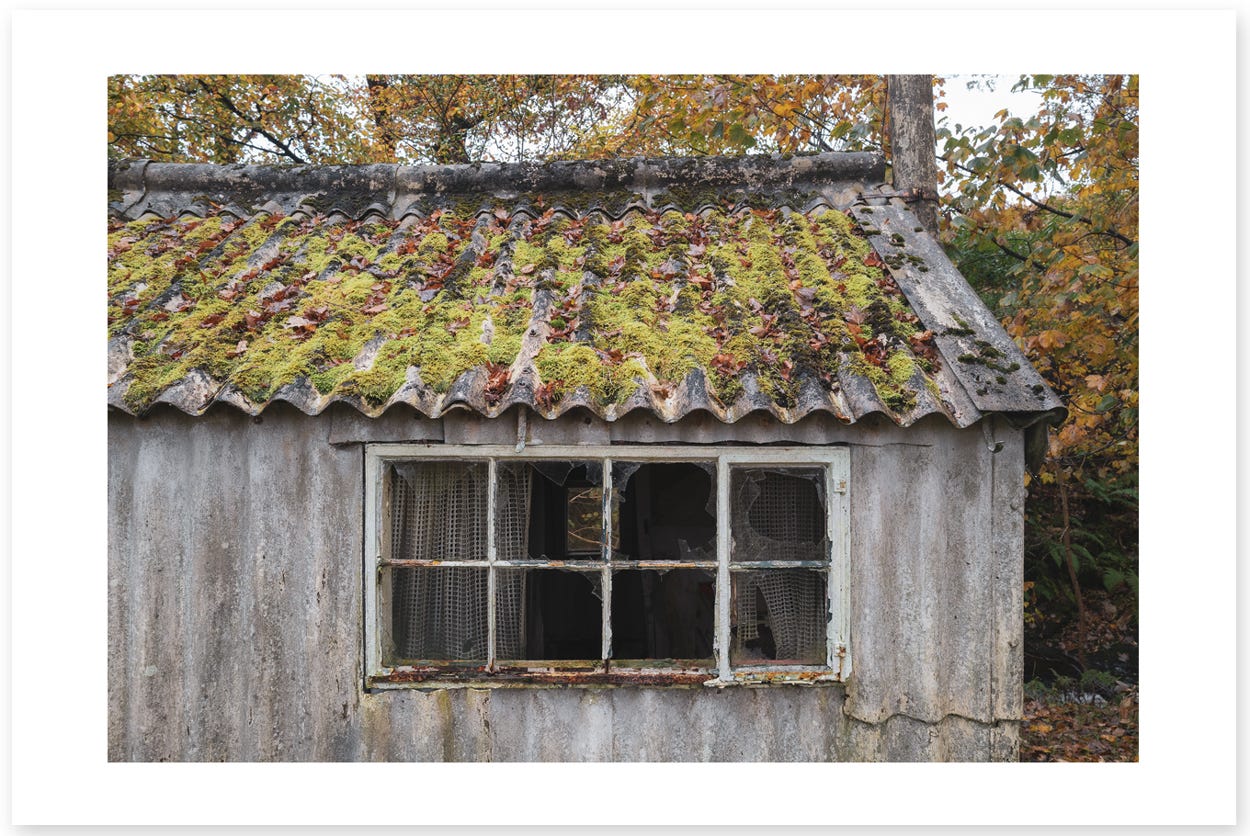
Before we jump inside, here are some of the little details on and around the building. This place is rapidly morphing back into wilderness.
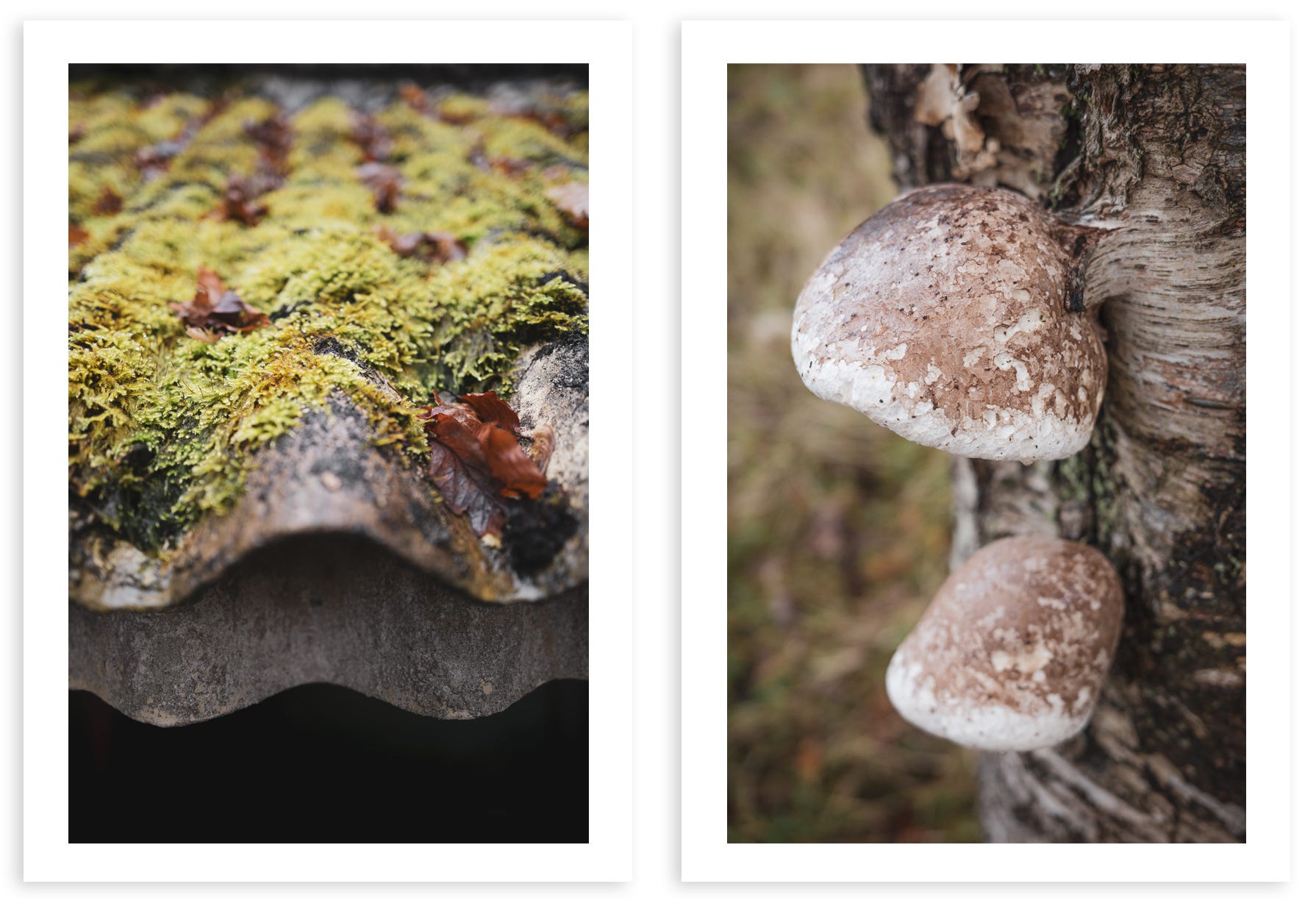
Moss and dead leaves made the hut’s roof invisible from a distance and if it hadn’t been for the jutting chimney I wouldn’t have spotted it.
The front door looked like it was once a cheerful red but had softened to pastel pink. Trendy pubs pay for this faded glory look. Nature did this for free AND threw in unusable mud floors.
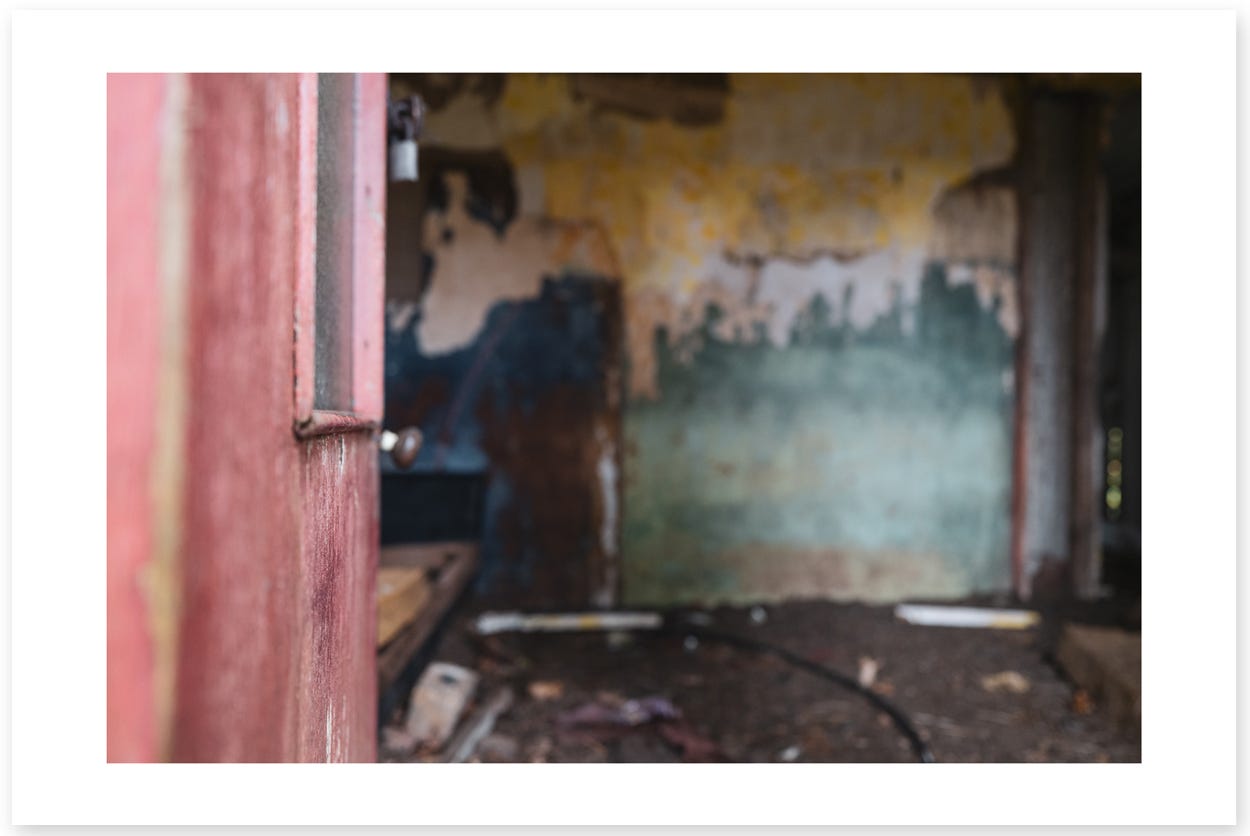
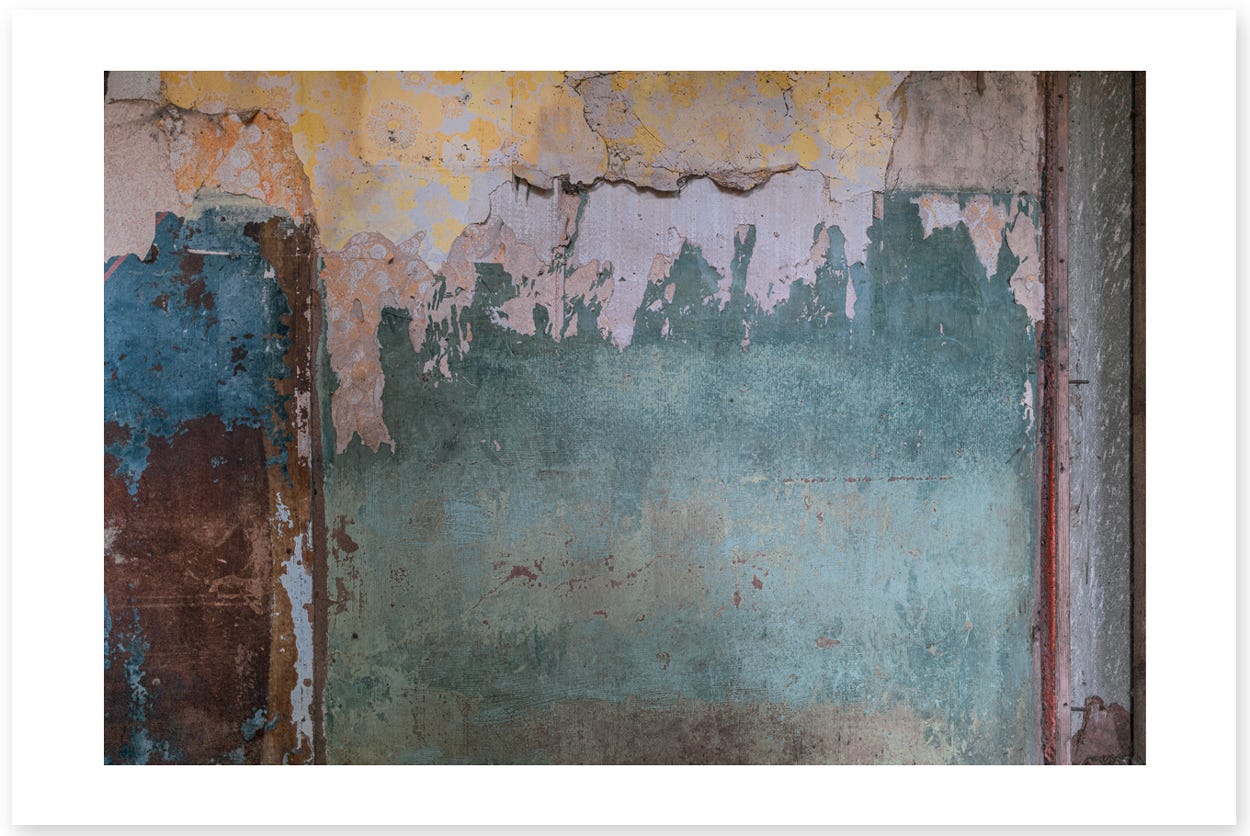
One of the best things about abandoned buildings is the colour and erosion you get from old decor after it has been battered by weather. We’ll look at the wallpaper in more detail in a moment but first a quick tour.
The whole building was made up of one and a bit rooms. I couldn’t see an obvious bed, only the innards of a largish sofa (or possibly a camp bed) strewn across the floor.
I did enter the other ‘bit’ room but I didn’t shoot it. I don’t know why. It was a mess but it also made me feel genuinely uneasy. No doubt my overactive imagination. It’s also possible it was riddled with sprites and bogles. No one is sleeping here, ever.
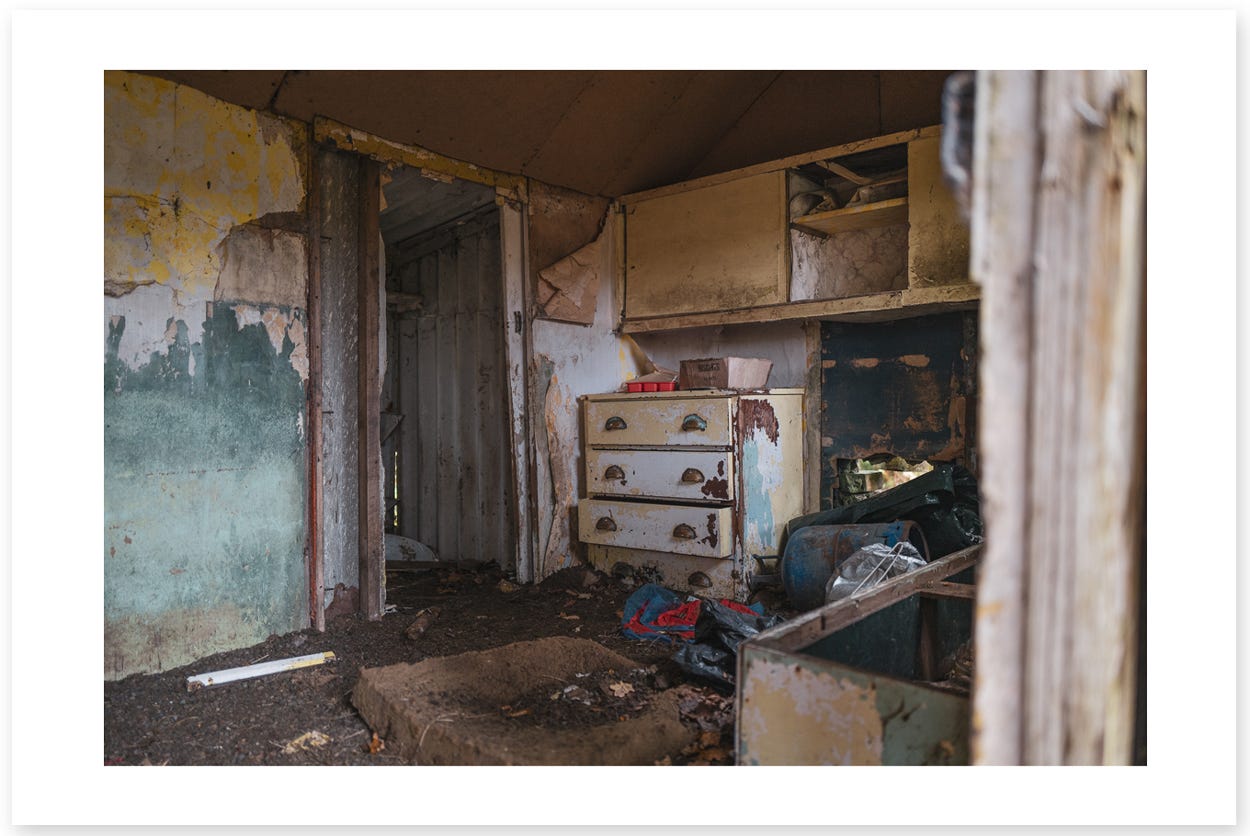
As I was shooting, ambient hypochondria seeped in. I’m sensitive to damp and this building was wet and musty. I found myself taking exaggerated gulps of air outside, holding my breath, and then darting back inside to take more photos.
There was no-one else there but I realised how absurd I must have looked doing this, which then made me laugh and exhale more. The shoot was improved enormously by this self-imagined peril and cackling madness.
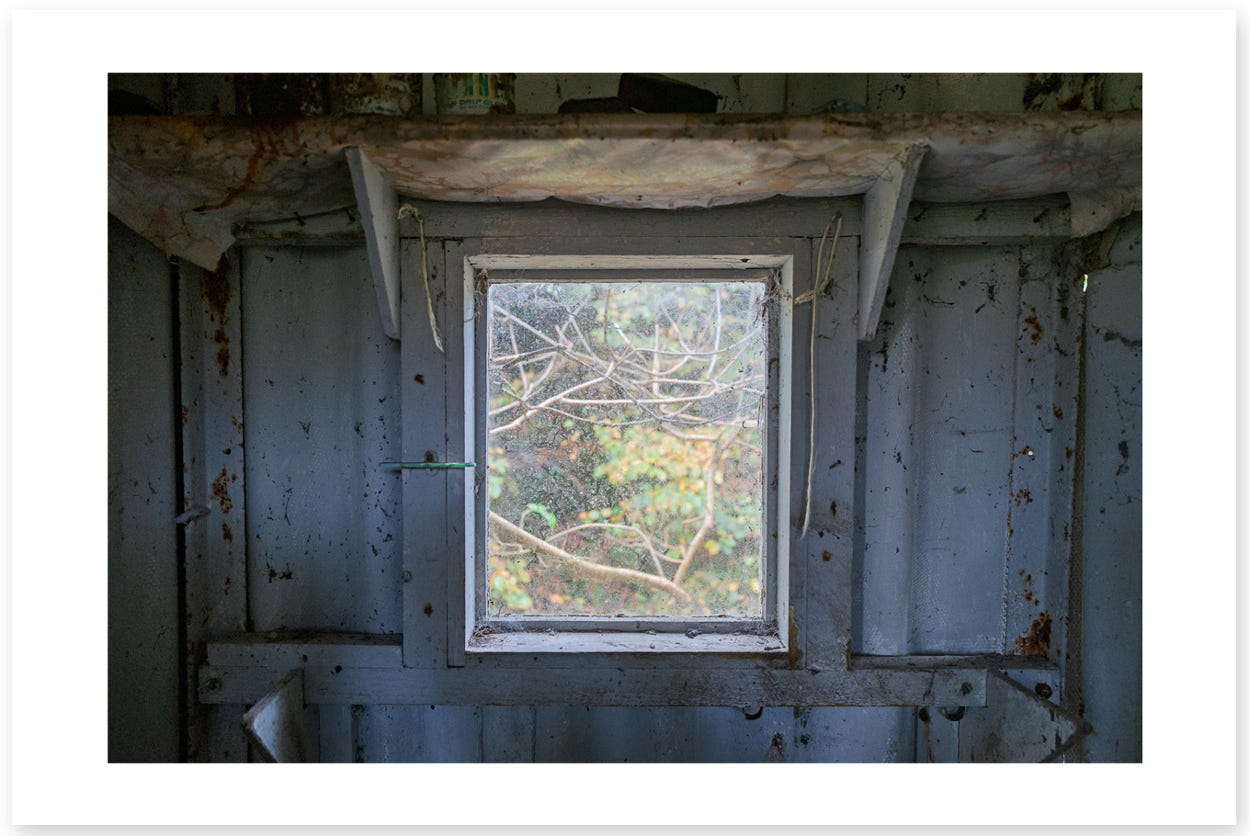
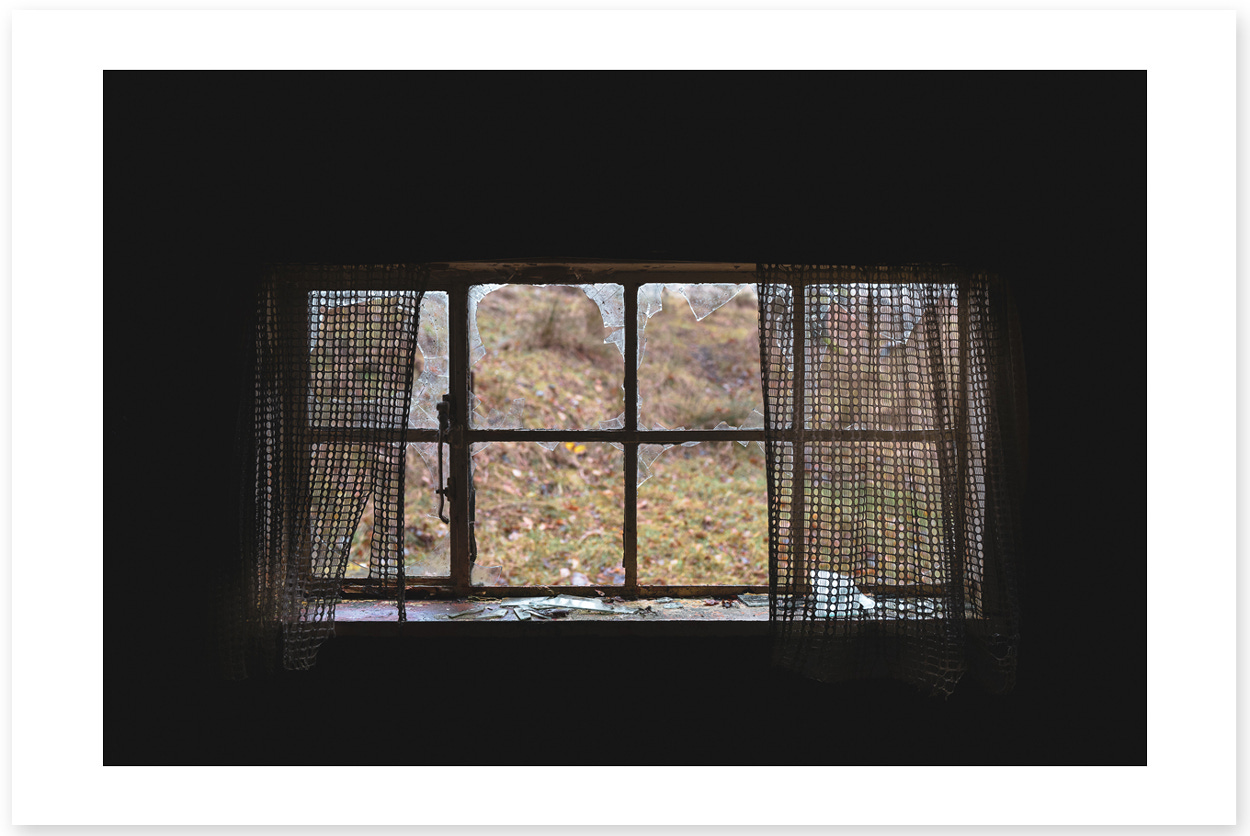
Almost all the windows were wonky or broken. This one, however, with the unfettered branch views, was in good condition.
This one, less so.
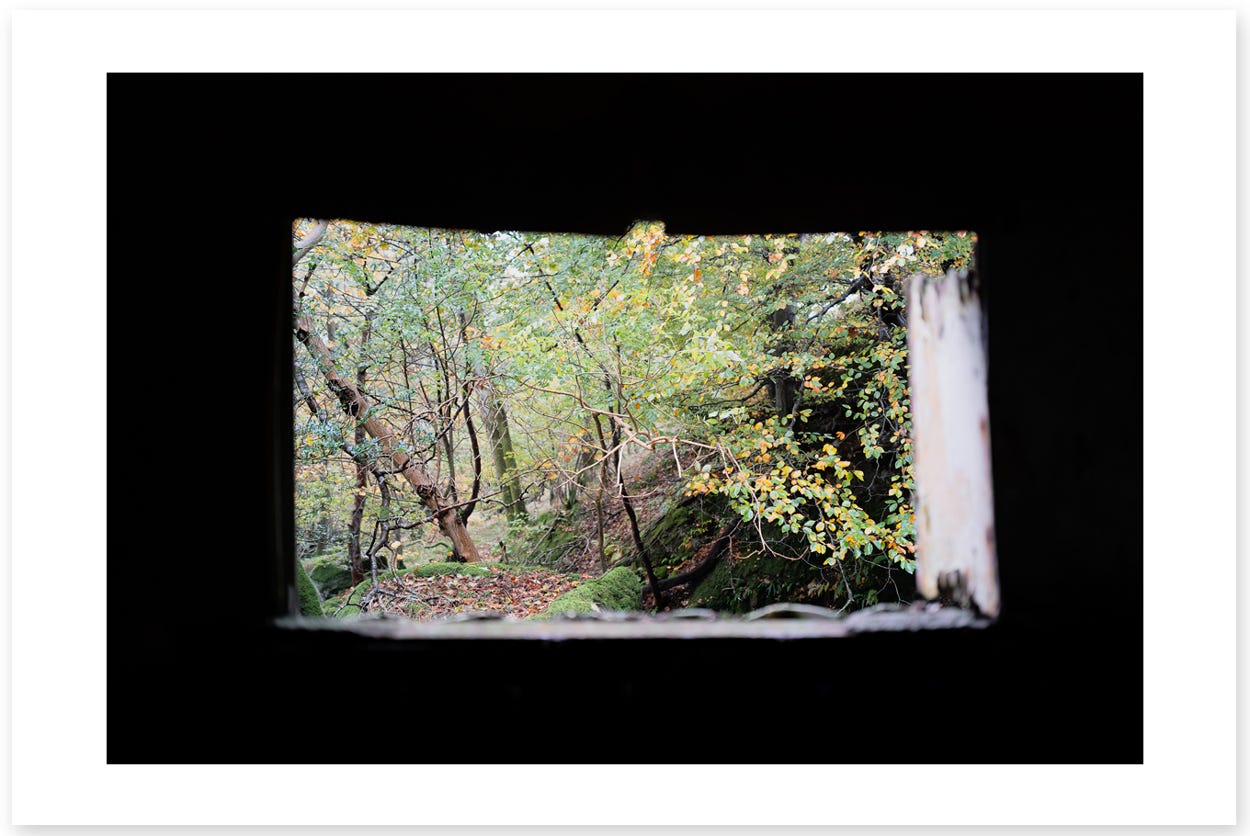
I often wonder why I, and so many others, love exploring abandoned buildings. I think part of it is that it catapults you into an uncaptioned story.
National Trust properties have thoughtfully preserved rooms. They are complete archives. They are canonical. They are amazing. They peer over their glasses at you.
They also feel… a bit staged. You mill about curated scenes. There are ropes to keep your mucky paws at bay. There are bored security guards. There are other tourists in fluorescent hiking jackets nearby. Some rustling crisp packets. The air is a comfortable temperature and there is free wifi and there are cakes and weak tea downstairs.
You are told explicitly what the story is. This person lived here and they did this and here’s what that means and here are some dates. But no mystery.
Exploring forgotten buildings has surprise, discovery and sometimes a flash of peril (Will the floorboard hold? Is the axe man coming back? Are there sprites and bogles?).
This, for me, makes it an eyeballs-on-stalks immersive experience. The smells (fish eggs and sandalwood) and the textures (wet sludge) are intense. The disintegrating objects create shifting works of art.
Humans are fascinated by storytelling and here you have some pieces of a jigsaw, some breadcrumb trails and signs of human life… but no answers.
You picture who built or used this building. What did they use it for? How did they feel when they were in there?
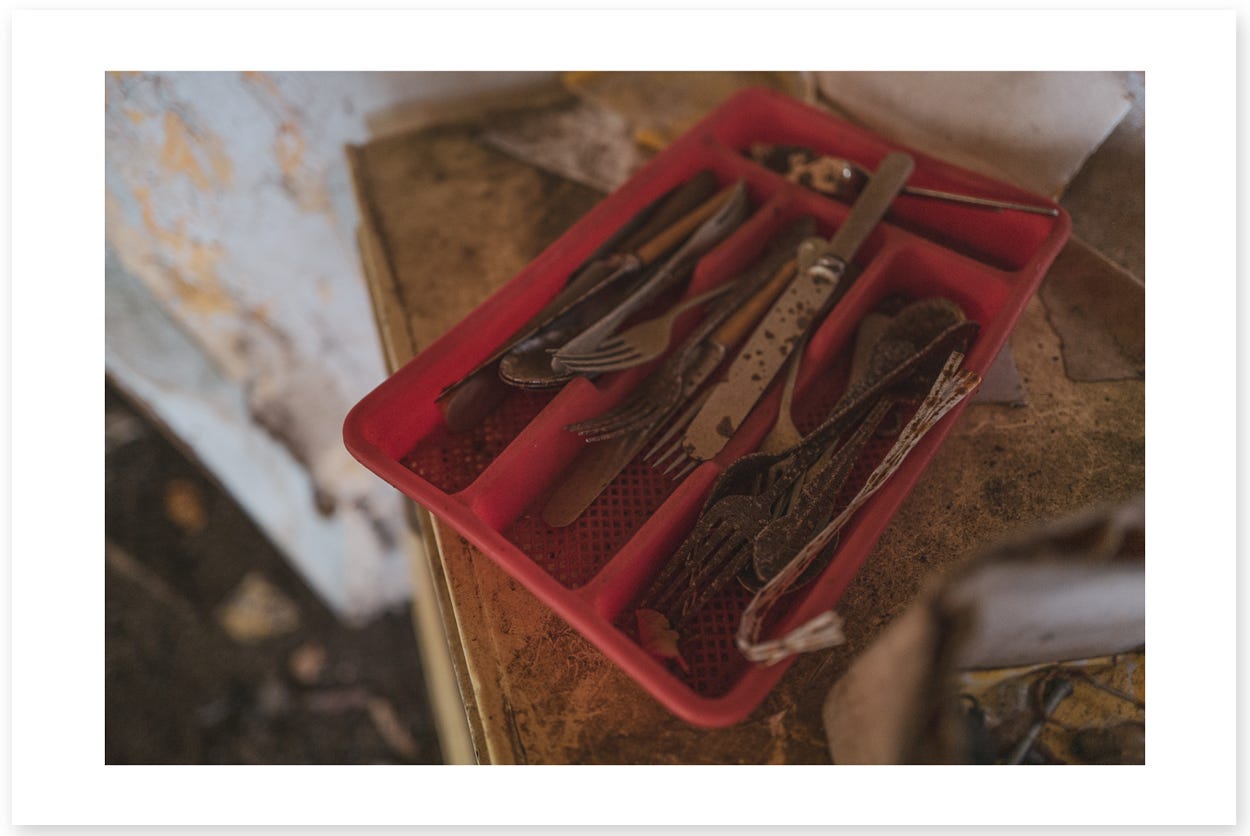
There are the items left behind. Day to day objects. For such a small space I was surprised to find so much cutlery.
I have a picture in my mind of the person in here and what they were thinking. My picture will be different to yours (both our pictures will involve a man with a beard, an axe and a pewter tankard) and I think there is something wonderful about that.
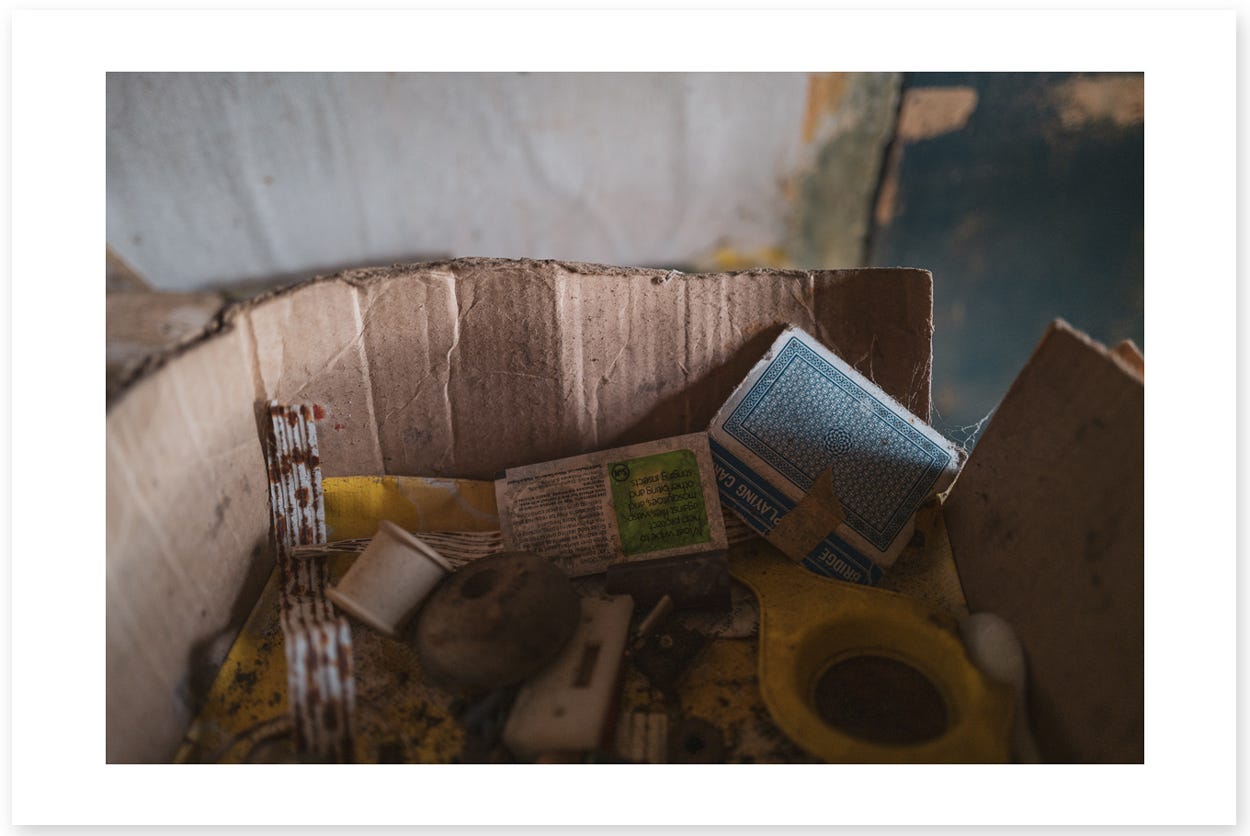
Next to the cutlery was a little cardboard box full of parts, no complete items, except for a pack of playing cards.
One of my favourite things is to try and record the patina and colour from eroding decorations. Wallpaper is particularly exciting. So is paint when there have been multiple coats in different colours. Some parts peel or wear or fade faster than others.
Just think, a human once spent hours decorating this and then sat down and smiled at their work. Then nature moves in and sandblasts it all with abstract art.
You get to glimpse a betwixt world: half human directed aesthetic, half nature’s chaos.
What was this building?
I think it was a bothy, but one primarily for daytime excursions. Somewhere for a woodcutter or herder to pause for lunch or a dram of whisky, or to rest their head if the weather turned or if the light escaped them.
I keep thinking about the wallpaper. Even in its newly built state this would have been a cold, wet building. The wallpaper would have warped and peeled before the paste had time to set and yet there are multiple layers.
Stumbling across and documenting abandoned buildings is, for me, a foraging flow state.
As I leave I notice that someone else must have visited recently. They had a diet coke.
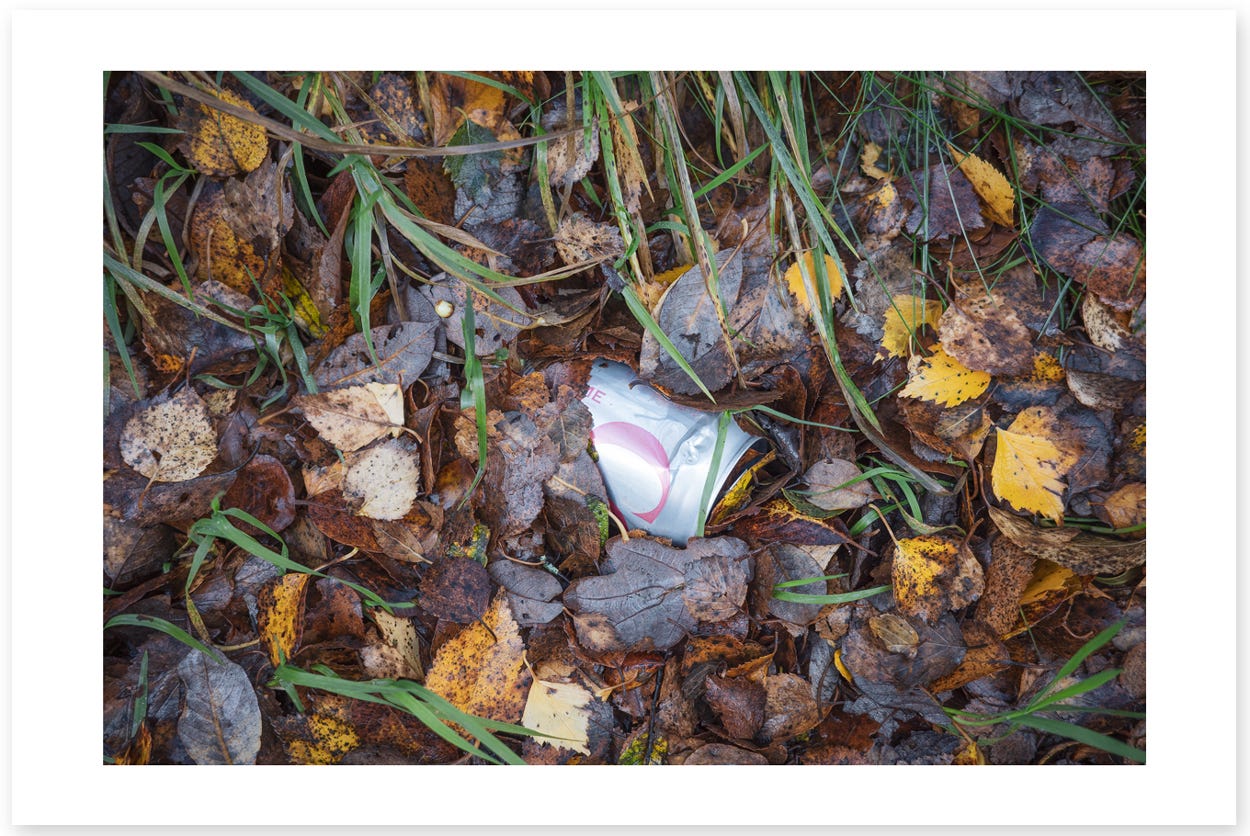
This will be a relic for the version of me who visits in 30 years’ time with a robot dog and a holographic brain camera.
Interesting find. And nice exploration shots. Somehow I feel like the outside has become somehow charming by giving into nature while the inside is more haunting/disturbing. (No wonder you felt as you did in there.) Thanks for sharing this adventure.
Thanks KewtieBird. Yes, it definitely had that feel. Charming outside and a bit sinister inside. Probably not helped by my fondness for horror movies!